
Making Academic Language Stick: The Project GLAD® Cognitive Content Dictionary
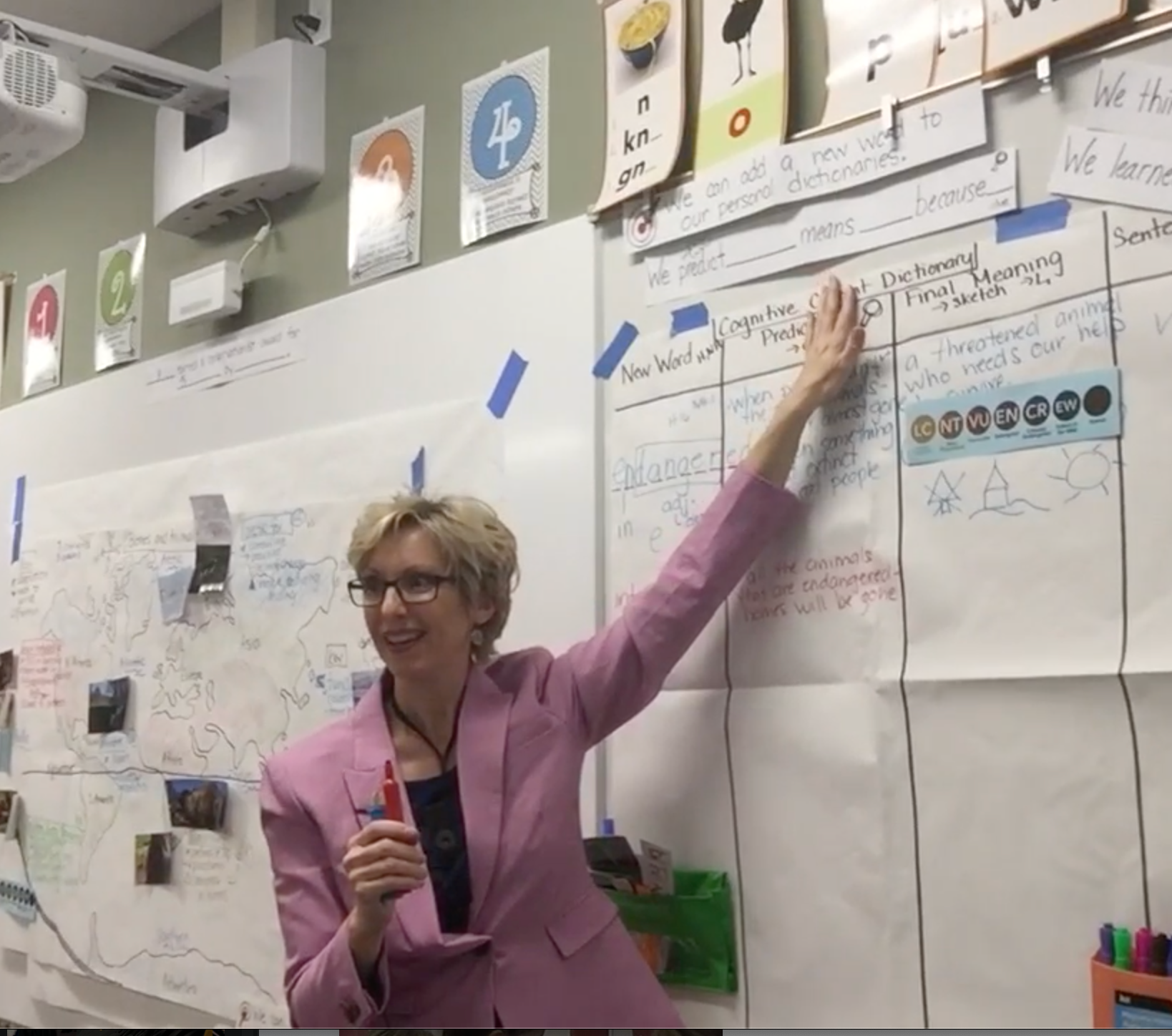
One of the biggest challenges in today’s classrooms is helping students truly understand and use academic vocabulary—not just memorize definitions for a test. This is where OCDE Project GLAD®’s Cognitive Content Dictionary (CCD) shines. More than a vocabulary activity, the Cognitive Content Dictionary is a powerful strategy that builds language, comprehension, and confidence for all learners, especially language learners.
What Is a Cognitive Content Dictionary?
The CCD is a cornerstone strategy in the Project GLAD® model designed to explicitly teach key academic vocabulary in a meaningful, interactive way. Rather than presenting words in isolation, teachers introduce vocabulary as part of concept development, connecting words to visuals, gestures, discussion, and real-world meaning.
This multisensory approach ensures that students don’t just recognize a word—they understand it deeply and can apply it across contexts.
Why Vocabulary Instruction Matters
Academic vocabulary is often the gatekeeper to content learning. Students may understand a concept but struggle to express it because they lack the language. For language learners, this challenge is even greater, but native speakers also benefit from explicit instruction in academic terms.
The CCD addresses this challenge by:
- Making vocabulary visible and accessible
- Repeatedly exposing students to key terms
- Encouraging oral language development
- Supporting long-term retention
When students interact with words in multiple ways, those words move from short-term memory into usable knowledge.
While Project GLAD® strategies benefit all students, they are essential for the language development of English learners by:
- Building oral language skills in a low-risk environment
- Supporting students with learning differences
- Encouraging collaborative learning
Students begin to take ownership of academic vocabulary, using words naturally in discussions, writing, and assessments.
Instructional Process
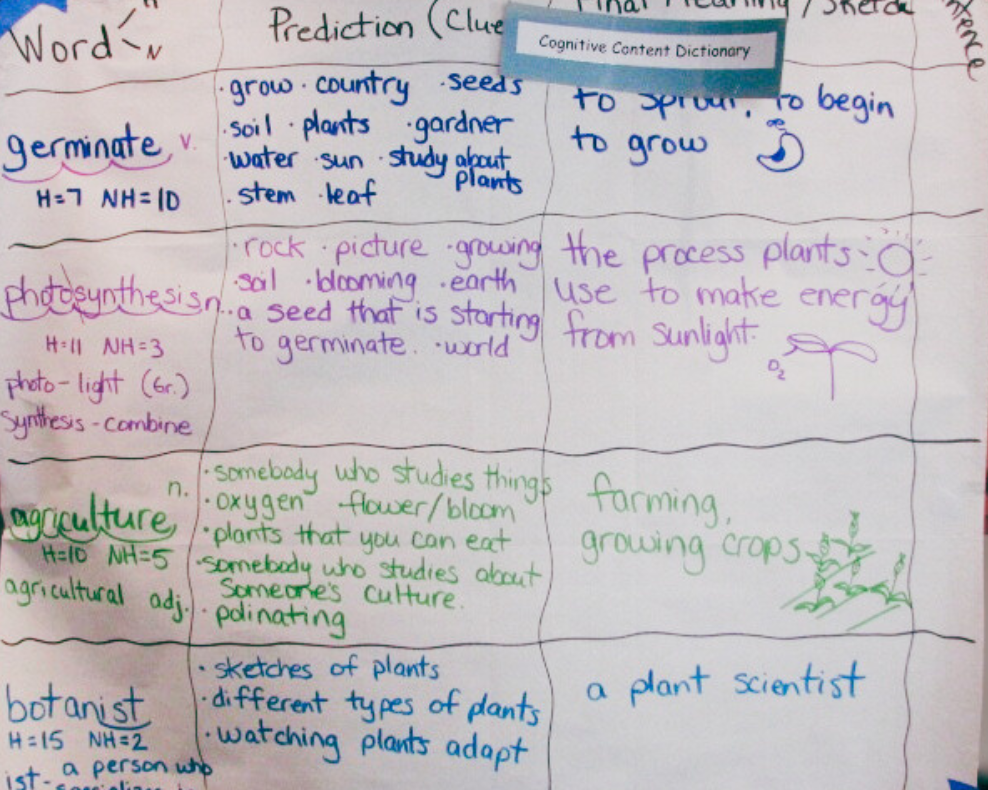
The CCD has 10 steps that are delivered over 2 days:
- New Word - Teacher introduces the new word. Sound it out as they write it on the chart.
- Pronunciation Practice – Teacher prompts students to repeat the word multiple times. “Say it to the ceiling”, “Say it to something green, etc”
- Heard/Not Heard – Activate what students may already know or think they know about the word by taking a vote. “Who has heard/not heard this word before?”
- Predictions – Student teams turn and talk to make a prediction what the word might mean based on context, pronunciation, or background knowledge.
- Signal Word – The new word is paired with a synonym and gesture and becomes the signal for transition in the classroom for the rest of the day.
- Teacher - “When I give you the signal word line up at the door. Germinate.”
- Students – “Germinate. Sprout.” (Do a gesture indicating a plant sprouting.)
- In addition, the teacher teaches the new word in context all day – read about it, chant and sing using the word, include it on anchor charts, ask students to discuss, etc…
- Final Meaning – (Day 2) Student teams come up with a student-friendly final meaning. Teacher surveys teams and records on chart
- Sketch – add sketch to final meaning
- Word Study – Add grade-appropriate word study that will make a connection with other ELA lessons (prefixes, suffixes, vowel sounds, homonyms, etc)
- Sentence – Teacher models a sentence using the word. Teams come up and report out their own sentence.
- New Word – Introduce new word for today and continue with steps 1-5.
These are the basic steps. Please join us in an OCDE Project GLAD® Foundations training for a deep dive into the strategy nuances and implementation recommendations.
The Cognitive Content Dictionary is a cornerstone of the Project GLAD® model because it works. It transforms vocabulary instruction from a passive task into an engaging, brain-based learning experience. By combining language, movement, visuals, and interaction. This strategy helps students not only learn academic words—but own them.
When students have the language, they have the power to think, discuss, and succeed.
Thanks for reading,
Jody and Sara
THESE TIPS ARE GREAT!
I want to receive them once a month!
Author

Jody Bader
Jody Bader is an educator with two decades of experience as a classroom teacher, ELD specialist, instructional coach, education researcher, and one of the Northwest’s leading OCDE Project GLAD® Consultants. She has worked with teachers in the US and internationally who are committed to improving their practice and the culture of their classrooms for all students through the OCDE Project GLAD® model. She has trained and coached thousands of teachers and has a passion for mentoring new trainers in training.
Author

Dr. Sara Martinez
An educator for nearly 20 years, Dr. Sara Martinez has worked with individuals from preschool through adulthood. She has extensive experience and background in education among English language learners and individuals in low socioeconomic status environments, combined with her doctoral work and experience in leadership development and change dynamics. Having trained and consulted with thousands of K-12 teachers and administrators, she has a wide base of knowledge and educational experience.
