
Differentiation vs. Scaffolding: What's the Difference and Why It Matters

Differentiation vs. Scaffolding: What’s the Difference—and Why It Matters
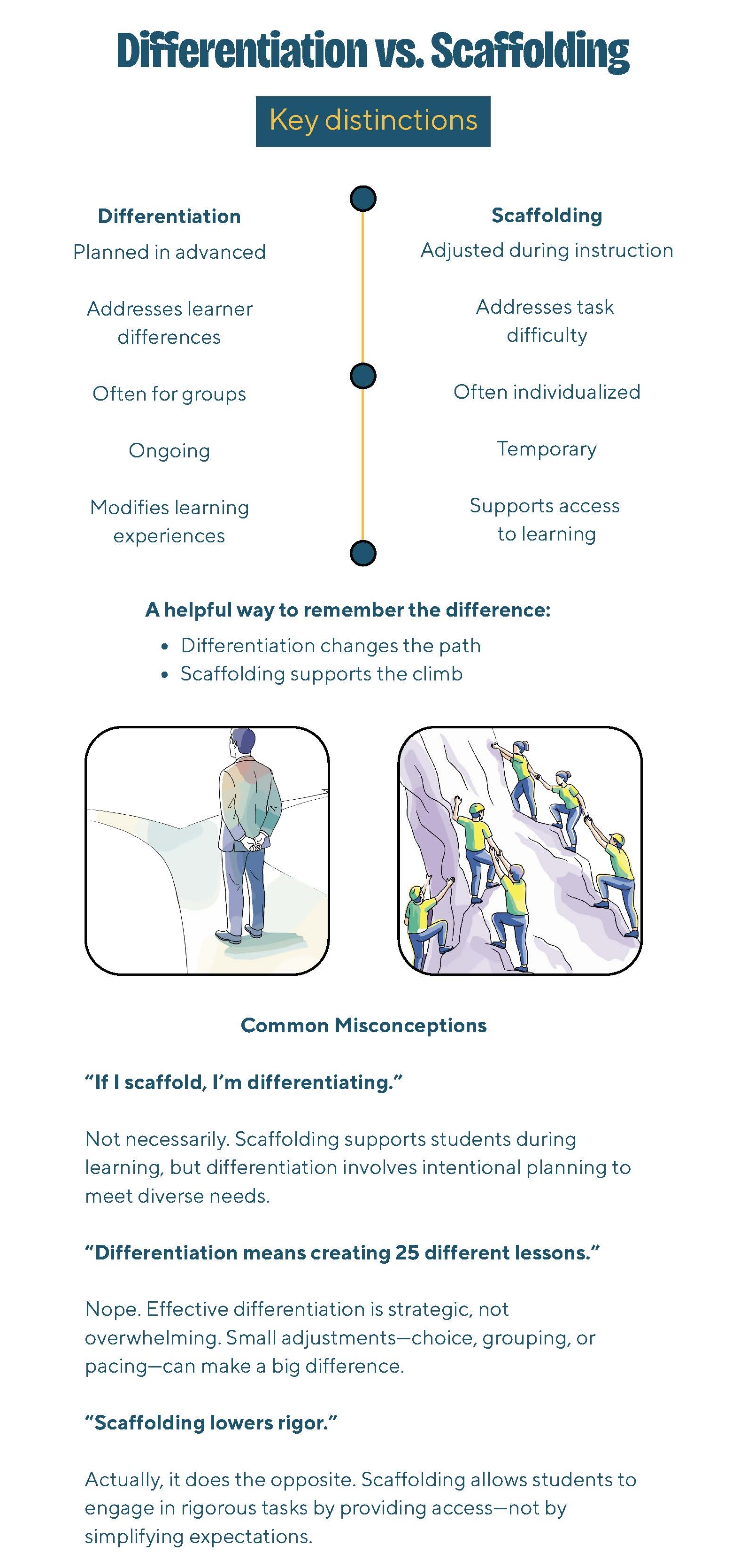
In education, few terms are used as often—and confused as frequently—as differentiation and scaffolding. Both are essential instructional practices. Both aim to support student learning. And both are grounded in the belief that students learn best when teaching responds to their needs.
But they are not the same thing.
At a recent GLAD® training, we engaged teachers in a discussion about the definition of differentiation. Here’s what your colleagues said (paraphrased for length):
“Differentiation is paying attention to learning styles and using a wide variety of strategies and methods.” Lidia
“Meet the needs of each student.” Lynn
“Planning to adjust your lesson to add scaffolding and adjust as needed without watering it down. They (students) still need to meet expectations.” Diane
(Responding to Diane) “That’s what I used to think, but adjusting for special education. You need to adjust students’ work for special cases.” Donna
What Is Differentiation?
Differentiation is a proactive approach to teaching that involves planning varied learning experiences to meet the diverse needs of students.
In any classroom, students differ in:
- Readiness levels
- Background knowledge
- Learning preferences
- Language proficiency
- Interests
Differentiation acknowledges these differences and adjusts instruction accordingly. Differentiation is in the planning. Scaffolding is the action. Differentiation is planning for scaffolding.
What Can Be Differentiated?
- Content – what students learn
- Process – how students engage with the material
- Product – how students demonstrate learning
- Learning Environment – where and with whom learning happens
What Is Scaffolding?
Scaffolding refers to the temporary supports a teacher provides to help students successfully complete a task they could not yet do independently.
- Modeling a skill step by step
- Providing sentence starters or graphic organizers
- Asking guiding questions
- Breaking complex tasks into smaller chunks
- Think-alouds that show expert thinking
- Checklists or worked examples
As students gain confidence and competence, these supports are gradually removed.
Are there strategies in the GLAD® model that include “plug and play” differentiation?
The tricky part of differentiation is the time and mental effort to plan for all your students’ diverse needs. Project GLAD® can help with that! Differentiation is built into the delivery steps for many of our strategies. Here are a few examples:
Word Card Review
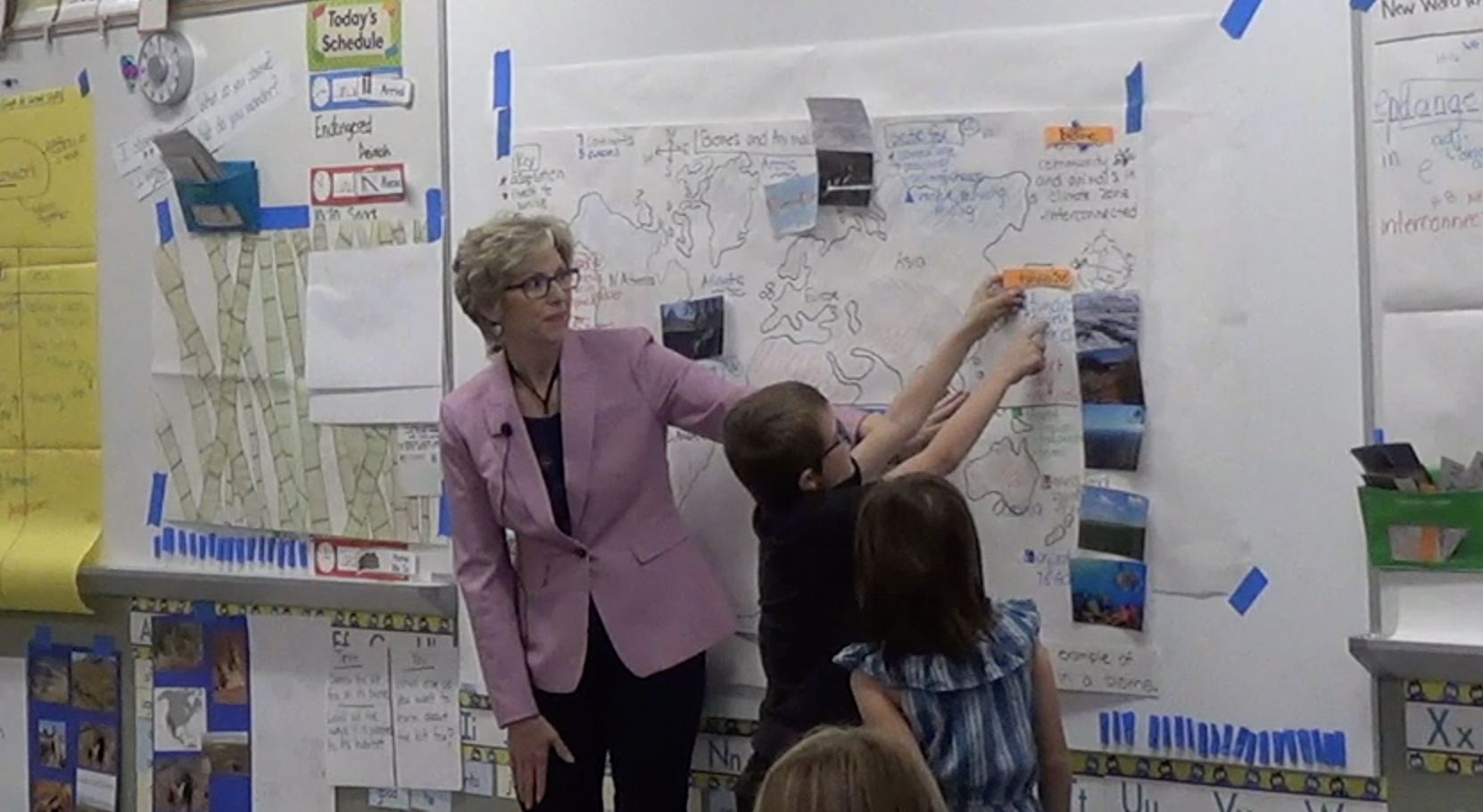
After every input chart (pictorials, graphics organizers, comparatives, and narratives), we follow up with a word card review on the following day. Following the research of H. Ebbinghaus’ 10/24/7 method, reviewing new learning at specific intervals (10 minutes, 24 hours, and 7 days) increases retention and recall of information.
GLAD®’s word card review is a review of academic vocabulary at the 24-hour mark. The differentiation comes in when teachers plan ahead which word card to pass out to which student – differentiating for reading and language proficiency level.
This is an example of differentiating for specific student needs within a whole group lesson.
Each student has the word card that they need and can interact with but we’re all participating in the same activity.
Differentiate what’s written on your word card in the following ways:
- Word to word match – same word in same color written on card and chart
- Word and sketch – same word in same color on card and chart + a sketch
- Word Family – the word on the card has a different suffix than the word on the chart
- Synonym or cognate – not the same word but similar, or a cognate
- Speech bubble – practice dialogue or idioms with quotes written in a speech bubble
- Picture – for a non-linguistic challenge, students match a picture with the word on the chart
- Blank -student gets a blank card, they write a new word they learned and place it where it belongs on the chart
ELD Review
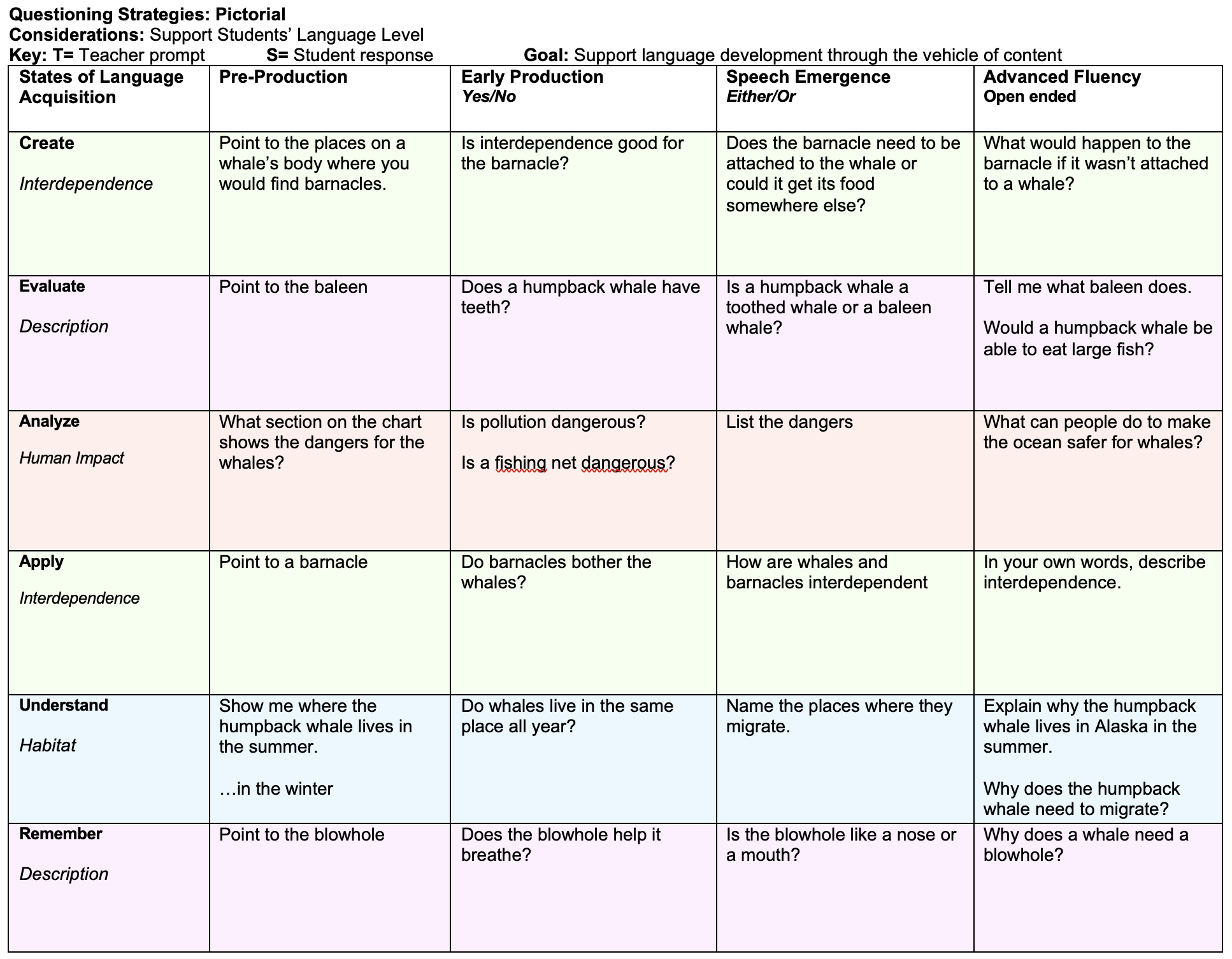
Other strategies differentiate for small groups of students with specific needs. In 2022, we covered the ELD Group Frame through the lens of assessment. The first part of that strategy is an ELD Review that is also done following an input chart. The differentiation planning comes in when the teacher creates a grid of leveled questions before the lesson. This practice:
- Increases participation by asking questions tailored to a student’s proficiency level.
- Builds confidence and fluency by encouraging students to speak more and reducing the need to translate in their heads
- Differentiates instruction by allowing the teacher do deliver one lesson to a mixed-ability class
- Promotes critical thinking by structuring the questions to differentiate for language but not thinking level
This is an example of an ELD Review Grid with Leveled Questions:
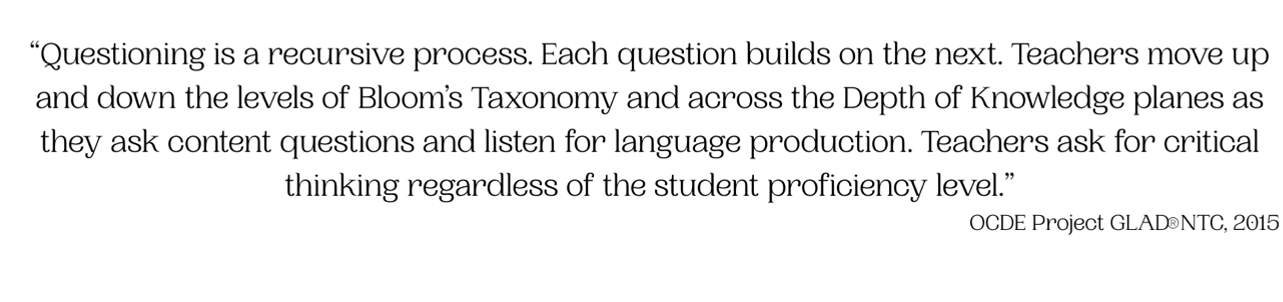
The Word Card Review and ELD Review are GLAD® examples of how to differentiate one lesson for multiple levels of learners. Give them a try and as always, we’re here for you!
Jody and Sara
Next Steps with Project GLAD®
THESE TIPS ARE GREAT!
I want to receive them once a month!
Author

Jody Bader
Jody Bader is an educator with two decades of experience as a classroom teacher, ELD specialist, instructional coach, education researcher, and one of the Northwest’s leading OCDE Project GLAD® Consultants. She has worked with teachers in the US and internationally who are committed to improving their practice and the culture of their classrooms for all students through the OCDE Project GLAD® model. She has trained and coached thousands of teachers and has a passion for mentoring new trainers in training.
Author

Dr. Sara Martinez
An educator for nearly 20 years, Dr. Sara Martinez has worked with individuals from preschool through adulthood. She has extensive experience and background in education among English language learners and individuals in low socioeconomic status environments, combined with her doctoral work and experience in leadership development and change dynamics. Having trained and consulted with thousands of K-12 teachers and administrators, she has a wide base of knowledge and educational experience.
